


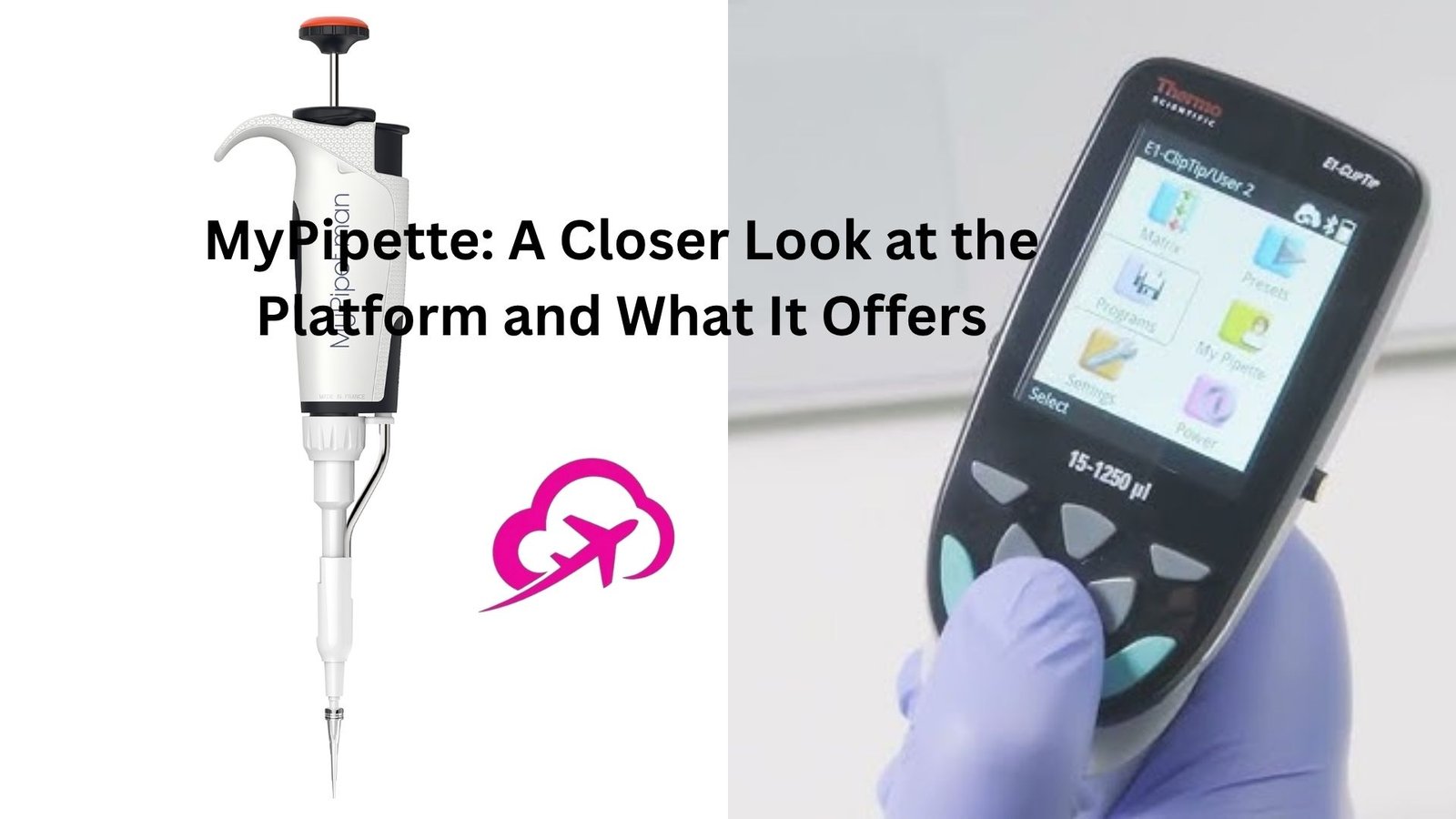
Sometimes a website appears on your screen, and within seconds you’re wondering what it actually does. MyPipette is one of those names that sparks curiosity. It sounds scientific, perhaps related to laboratories or research, yet many people come across the term without immediately understanding its purpose.
That’s understandable. Digital platforms often have unique names that don’t instantly explain what they’re about. MyPipette has attracted attention from users looking for information about laboratory tools, research workflows, and online resources connected to scientific work. The name itself comes from the laboratory pipette, one of the most commonly used instruments in science.
Before diving deeper, it’s worth exploring why platforms like MyPipette matter and what makes them useful for researchers, students, and professionals alike.
Table of Contents
- What Is MyPipette?
- Why Laboratory Tools Need Digital Support
- The Growing Importance of Research Management
- How MyPipette Fits Into Modern Scientific Work
- Everyday Situations Where MyPipette Can Help
- Features Users Often Look For
- Benefits for Students and New Researchers
- Why Organization Matters in the Lab
- Common Challenges Users Face
- The Future of Digital Laboratory Platforms
- Final Thoughts
What Is MyPipette?
At its core, MyPipette is associated with laboratory and research-related workflows. The name naturally connects to pipettes, which are essential tools used to measure and transfer precise amounts of liquid.
Anyone who has spent time in a science classroom has probably seen one. Researchers use pipettes constantly, whether they’re performing medical testing, analyzing samples, conducting experiments, or developing new products.
The digital side of laboratory work has grown dramatically over the past decade. Researchers no longer rely entirely on paper notebooks, handwritten records, and filing cabinets. Platforms connected to laboratory equipment help streamline daily tasks and reduce the risk of errors.
That’s where solutions associated with names like MyPipette become relevant. They bridge the gap between physical laboratory work and digital management.
Why Laboratory Tools Need Digital Support
Science depends on accuracy.
A tiny mistake can affect an entire experiment. Something as simple as recording the wrong measurement can lead to incorrect conclusions and wasted hours of work.
Years ago, laboratories handled most recordkeeping manually. Researchers wrote notes in notebooks, stored data in folders, and often spent valuable time searching for information.
Now things are different.
Digital platforms help researchers organize data, track equipment, manage experiments, and collaborate more efficiently.
Imagine a laboratory technician handling dozens of samples in a single day. Without a structured system, keeping track of everything becomes difficult very quickly. Digital tools reduce that burden by making information easier to access and manage.
MyPipette fits into this broader movement toward smarter laboratory operations.
The Growing Importance of Research Management
Research is no longer a solitary activity.
Modern scientific projects often involve multiple teams, different locations, and large amounts of data. Even smaller research groups can generate hundreds of files, reports, images, and measurements over time.
Managing all of that information is a challenge.
Here’s the thing: collecting data is only part of the process. Organizing it properly is just as important.
Researchers need systems that help them:
- Keep records organized
- Access information quickly
- Share findings with colleagues
- Reduce administrative workload
- Maintain accuracy across projects
Without these systems, productivity can suffer.
Many professionals would rather spend their time conducting meaningful research than searching through spreadsheets and folders. That’s one reason digital laboratory solutions continue to gain popularity.
How MyPipette Fits Into Modern Scientific Work
The scientific world is becoming increasingly connected.
Equipment, software, databases, and cloud services now work together in ways that weren’t possible a generation ago. A laboratory instrument can generate data automatically, upload it to a central system, and allow team members to review it from another location.
That’s a major improvement over older methods.
MyPipette represents the type of platform that supports these evolving workflows. Instead of treating laboratory activities as isolated tasks, modern systems encourage integration and efficiency.
Consider a researcher working on a long-term project. Over several months, they might collect thousands of measurements. Having a structured digital environment makes reviewing, comparing, and analyzing that information much easier.
Small improvements in organization often lead to significant gains in productivity.
Everyday Situations Where MyPipette Can Help
Sometimes the value of a platform becomes clearer through practical examples.
Picture a university student working on a biology project. They’re juggling classes, assignments, and laboratory sessions. Keeping track of research notes can become overwhelming.
A structured digital solution helps simplify that process.
Now imagine a laboratory manager responsible for multiple team members. They need visibility into ongoing projects, equipment usage, and research progress. Having information centralized can save substantial time.
Another example involves collaboration.
A researcher in one city may need to share data with colleagues elsewhere. Digital platforms make communication smoother and reduce delays caused by manual information sharing.
These aren’t dramatic situations. They’re everyday realities in research environments.
That’s exactly why organization tools continue to matter.
Features Users Often Look For
When people explore platforms connected to laboratory work, certain expectations tend to appear repeatedly.
Ease of use sits near the top of the list.
Researchers already deal with complex scientific processes. They don’t want software that creates additional confusion.
A good platform should feel intuitive rather than overwhelming.
Data accessibility is another important factor. Users need quick access to records without spending unnecessary time navigating complicated systems.
Security also matters.
Research data can be sensitive, especially in medical, pharmaceutical, or commercial environments. Protecting information is essential.
Collaboration tools are increasingly valuable as well. Teams often work across departments and locations, making communication features highly beneficial.
While different users have different priorities, these themes appear consistently across scientific and research communities.
Benefits for Students and New Researchers
Starting out in a laboratory environment can feel intimidating.
There are procedures to learn, equipment to understand, and documentation requirements to follow. New researchers often discover that organization skills are almost as important as technical knowledge.
That’s not always obvious at first.
Many students focus heavily on experiments and calculations while underestimating the importance of recordkeeping. Later, they realize how valuable organized data can be.
A platform like MyPipette can support better habits from the beginning.
When information is stored systematically, reviewing previous work becomes easier. Students can track progress, revisit findings, and understand how projects evolve over time.
Those habits often remain useful throughout an entire career.
Why Organization Matters in the Lab
Let’s be honest.
Organization isn’t the most exciting topic in science.
People usually get interested in discoveries, innovations, and breakthroughs. Few researchers dream about filing systems or documentation procedures.
Yet organization often determines whether a project succeeds smoothly or becomes unnecessarily complicated.
Imagine trying to compare experimental results from six months ago without clear records. The process becomes frustrating almost immediately.
Good organization reduces stress and improves efficiency.
It also supports reproducibility, which remains one of the foundations of scientific work. Other researchers need to understand how results were obtained. Clear records make that possible.
Digital tools help reinforce these practices by creating structured environments for information management.
Common Challenges Users Face
No system is perfect.
Users exploring research-related platforms frequently encounter challenges during implementation and daily use.
Learning new software takes time. Even experienced professionals may need an adjustment period.
Integration can present another obstacle. Laboratories often use multiple systems simultaneously, and getting them to work together isn’t always straightforward.
Data migration can also be a concern.
When organizations move from older methods to newer digital platforms, transferring information accurately becomes important.
Then there’s the human factor.
Some people adapt quickly to new workflows, while others prefer familiar routines. Successful adoption usually requires patience, training, and clear communication.
These challenges aren’t unique to MyPipette. They’re common across many digital solutions in research and scientific environments.
The Future of Digital Laboratory Platforms
Technology continues moving forward at an impressive pace.
Laboratories are becoming more connected, more automated, and more data-driven. What once required extensive manual effort can now be completed with significantly greater efficiency.
Future platforms will likely focus on deeper integration, improved collaboration, and smarter data management.
Researchers increasingly expect information to be available when and where they need it.
Cloud-based systems, automated reporting, and enhanced connectivity are already shaping laboratory environments around the world.
At the same time, usability will remain crucial.
Advanced features are valuable, but only when people can actually use them effectively. Simplicity often becomes a competitive advantage.
The most successful platforms will probably be those that balance powerful functionality with a straightforward user experience.
Final Thoughts
MyPipette represents more than just a name connected to laboratory work. It reflects the broader shift toward digital organization, efficient research management, and smarter scientific workflows.
Science has always depended on precision. Today, that precision extends beyond physical instruments and into the digital systems that support them.
Whether someone is a student stepping into a laboratory for the first time or an experienced researcher managing complex projects, organized information remains incredibly valuable.
Technology can’t replace scientific curiosity, careful thinking, or practical expertise. What it can do is remove unnecessary friction and make important work easier to manage.
That’s ultimately where the value of platforms like MyPipette comes from. They help people spend less time wrestling with information and more time focusing on the research that truly matters.
