


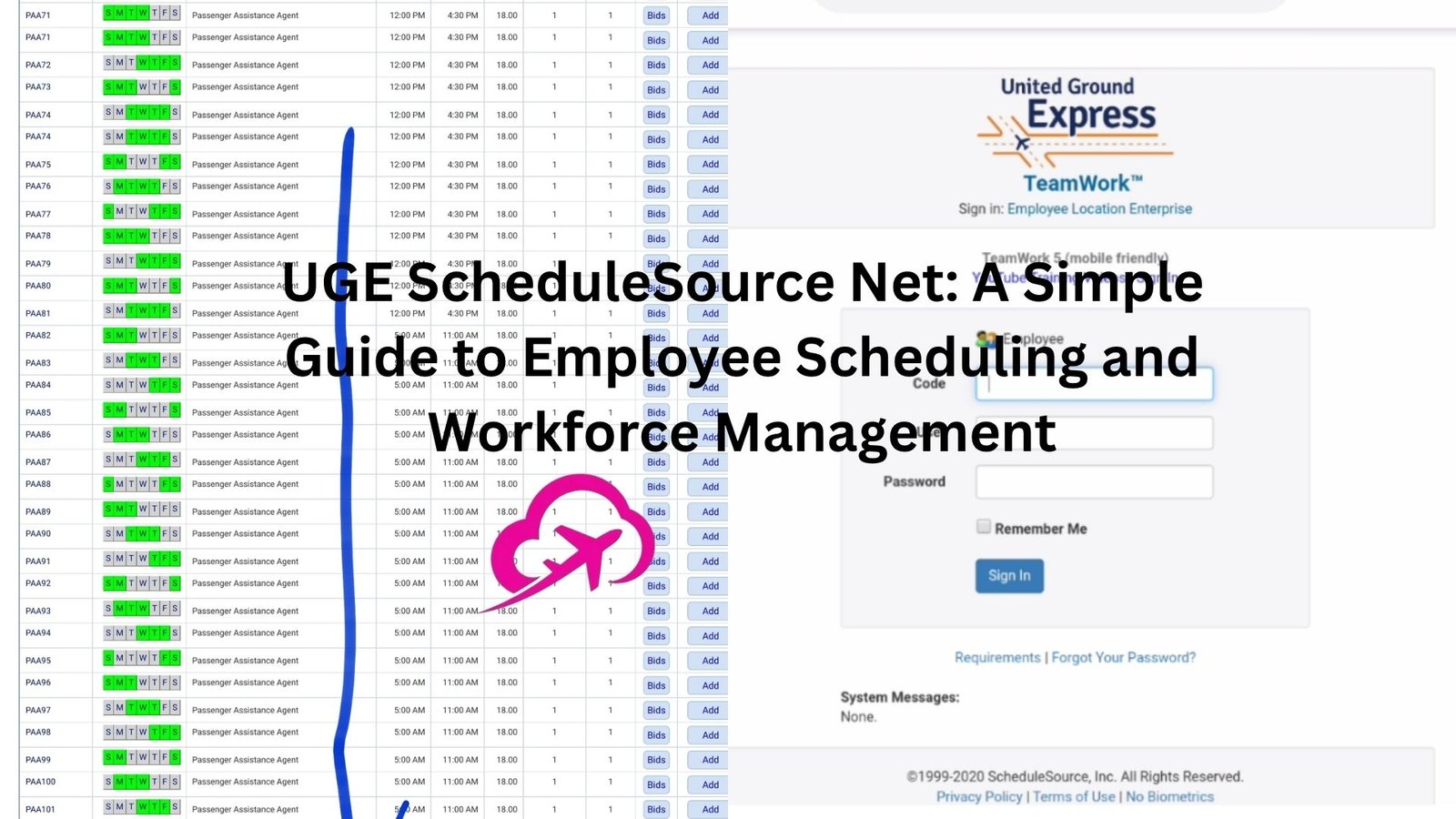
Keeping track of employee schedules sounds easy until you’re the person responsible for it. One shift change, a missed request, or a last-minute absence can turn an organized week into a stressful mess. That’s exactly why platforms like UGE ScheduleSource Net have become important for many businesses.
Whether you’re an employee checking your next shift or a manager trying to coordinate dozens of workers, having one place for scheduling can make a huge difference. Instead of endless phone calls, text messages, and printed schedules taped to a wall, everything becomes available online.
Let’s take a closer look at what UGE ScheduleSource Net is, how it works, and why so many organizations rely on digital scheduling systems today.
Table of Contents
- What Is UGE ScheduleSource Net?
- Why Online Scheduling Matters Today
- How Employees Use UGE ScheduleSource Net
- Features That Make Scheduling Easier
- Benefits for Managers and Supervisors
- Common Challenges and How the Platform Helps
- Mobile Access and Convenience
- Security and Employee Information
- Tips for Getting the Most Out of UGE ScheduleSource Net
- The Future of Workforce Scheduling
- Final Thoughts
What Is UGE ScheduleSource Net?
UGE ScheduleSource Net is an online workforce scheduling platform used by organizations to manage employee schedules, shift assignments, availability, and workforce communication.
At its core, the platform gives employees and managers access to scheduling information through a web-based system. Instead of relying on paper schedules or multiple communication channels, users can log in and view relevant information in one place.
Think about a retail store with 50 employees. Every week, someone has to build schedules, manage time-off requests, fill open shifts, and communicate changes. Doing that manually takes time and often creates confusion.
A centralized scheduling system helps reduce those problems by making information accessible and organized.
Why Online Scheduling Matters Today
Workplaces have changed dramatically over the past decade.
Years ago, employees often checked schedules posted on a bulletin board. If a manager updated a shift after the schedule was printed, everyone involved had to be contacted individually.
That approach doesn’t work very well anymore.
People expect instant access to information. They check their phones for everything from banking to travel reservations. Work schedules are no exception.
Here’s the thing. Employees want to know when they’re working without making phone calls or waiting for emails. Managers want fewer scheduling headaches. Digital scheduling platforms help bridge that gap.
When schedules are available online, everyone stays informed with less effort.
How Employees Use UGE ScheduleSource Net
For most employees, the platform serves as a scheduling hub.
After logging in, users can typically view upcoming shifts, review schedule updates, and stay informed about work assignments. Depending on organizational settings, employees may also have access to additional tools.
Imagine Sarah, a hospital employee working rotating shifts. Instead of calling the scheduling office every week, she logs in before planning her personal activities. Within seconds, she knows exactly when she’s scheduled to work.
That convenience may seem small, but it saves time and prevents misunderstandings.
Many employees appreciate having schedule visibility because it helps them coordinate family events, appointments, school commitments, and personal responsibilities.
Life is busy enough already.
Knowing your work schedule ahead of time makes planning easier.
Features That Make Scheduling Easier
Every scheduling platform has its own design, but several common features make systems like UGE ScheduleSource Net useful.
Schedule Viewing
This is usually the most frequently used feature.
Employees can view upcoming shifts without waiting for printed schedules or supervisor updates.
Quick access reduces uncertainty and allows workers to stay informed about changes.
Shift Updates
Schedules rarely stay exactly the same.
Unexpected absences, business demands, and staffing adjustments often require modifications. Online scheduling systems help communicate those updates more efficiently than traditional methods.
Instead of discovering a change after arriving at work, employees can often see updates through the system.
Availability Management
Many organizations allow employees to communicate availability preferences through scheduling platforms.
This helps managers create schedules that better align with employee needs while still meeting business requirements.
A worker attending evening classes, for example, might indicate unavailable hours in advance.
That information becomes easier to track than handwritten notes or email chains.
Workforce Communication
Communication is one of the biggest scheduling challenges.
When multiple managers and dozens of employees interact daily, important messages can easily get lost.
Integrated communication tools help keep scheduling information connected to the schedule itself.
That’s a practical advantage many organizations appreciate.
Benefits for Managers and Supervisors
Scheduling isn’t just difficult for employees.
Managers often face even greater challenges.
Creating schedules involves balancing staffing requirements, labor budgets, employee availability, skill levels, and business demand. One mistake can lead to understaffing or unnecessary labor costs.
Let’s be honest. Manual scheduling can be exhausting.
A manager spending several hours every week building schedules would probably prefer to focus on customer service, team development, or operational improvements.
Digital scheduling systems help streamline administrative tasks.
Many managers benefit from:
- Faster schedule creation
- Better visibility into staffing levels
- Easier communication with employees
- Reduced scheduling conflicts
- Improved workforce coordination
The result isn’t perfection, but it often means fewer problems and less time spent fixing avoidable mistakes.
Common Challenges and How the Platform Helps
No scheduling system eliminates every workplace challenge.
People still get sick. Emergencies still happen. Business needs still change unexpectedly.
However, digital scheduling platforms help reduce some of the most common issues.
One major problem is miscommunication.
Imagine an employee who thought they were scheduled for Saturday when the actual shift was Friday. Without a centralized system, misunderstandings like this can occur surprisingly often.
Having schedules available online creates a single source of truth.
Another challenge involves last-minute changes.
When managers need to update staffing quickly, online platforms allow information to be distributed more efficiently than calling employees one by one.
Even simple visibility improvements can make a noticeable difference in daily operations.
Mobile Access and Convenience
Modern workers expect flexibility.
They’re checking emails from coffee shops, reviewing documents from home, and managing personal tasks from smartphones.
Scheduling platforms have evolved to match those expectations.
Many workforce management systems now support mobile-friendly access, allowing employees to check schedules wherever they happen to be.
Picture someone finishing grocery shopping when they suddenly remember they need to verify next week’s schedule.
Instead of waiting until they get home, they can simply log in from their phone.
That kind of convenience may not sound revolutionary, but it reflects how people actually live and work today.
Accessibility matters.
The easier it is to access scheduling information, the more likely employees are to stay informed.
Security and Employee Information
Whenever workplace information is stored online, security becomes an important topic.
Employees want confidence that their personal information remains protected. Organizations need systems that safeguard workforce data responsibly.
Most workforce scheduling platforms incorporate security measures such as user authentication and controlled access permissions.
Managers typically see different information than employees.
Individual workers generally access only the data necessary for their roles.
This structured approach helps maintain privacy while ensuring that relevant scheduling information remains available to authorized users.
Security isn’t something employees think about every day, but it’s a critical part of any workforce management platform.
Tips for Getting the Most Out of UGE ScheduleSource Net
Using a scheduling platform effectively involves more than simply logging in occasionally.
Employees who check schedules regularly tend to stay better informed about updates and changes.
A few practical habits can make a difference.
Review schedules as soon as they’re published.
Double-check shifts before important personal commitments.
Update availability information when organizational policies allow.
Pay attention to schedule notifications and communications.
These habits take only a few minutes but can help prevent scheduling conflicts later.
Managers can benefit by keeping schedule information current and communicating changes promptly.
Consistency helps everyone trust the system.
When users know the platform contains accurate information, adoption becomes much easier.
The Future of Workforce Scheduling
Workforce scheduling continues to evolve.
Organizations increasingly rely on digital tools to improve efficiency, reduce administrative work, and enhance employee experiences.
Technology is making schedules more dynamic and accessible than ever before.
Rather than waiting for weekly schedule releases, employees often expect real-time visibility into their work assignments.
Businesses also recognize that flexible scheduling can improve employee satisfaction and retention.
The trend toward digital workforce management is unlikely to slow down.
If anything, scheduling platforms will continue becoming more integrated with broader workplace systems.
What once required paper schedules, spreadsheets, and endless phone calls can now be managed through a centralized online platform.
That’s a significant shift.
Final Thoughts
UGE ScheduleSource Net represents a modern approach to workforce scheduling that helps employees and managers stay organized, informed, and connected.
Scheduling may never be the most exciting part of running a business, but it’s one of the most important. When shifts are clear, communication improves, and employees know where they stand, workplaces tend to operate more smoothly.
For employees, the platform offers convenient access to scheduling information. For managers, it provides tools that help simplify workforce coordination and reduce administrative burdens.
At the end of the day, effective scheduling isn’t just about filling shifts. It’s about helping people work together more efficiently, and systems like UGE ScheduleSource Net are designed to support exactly that goal.
