


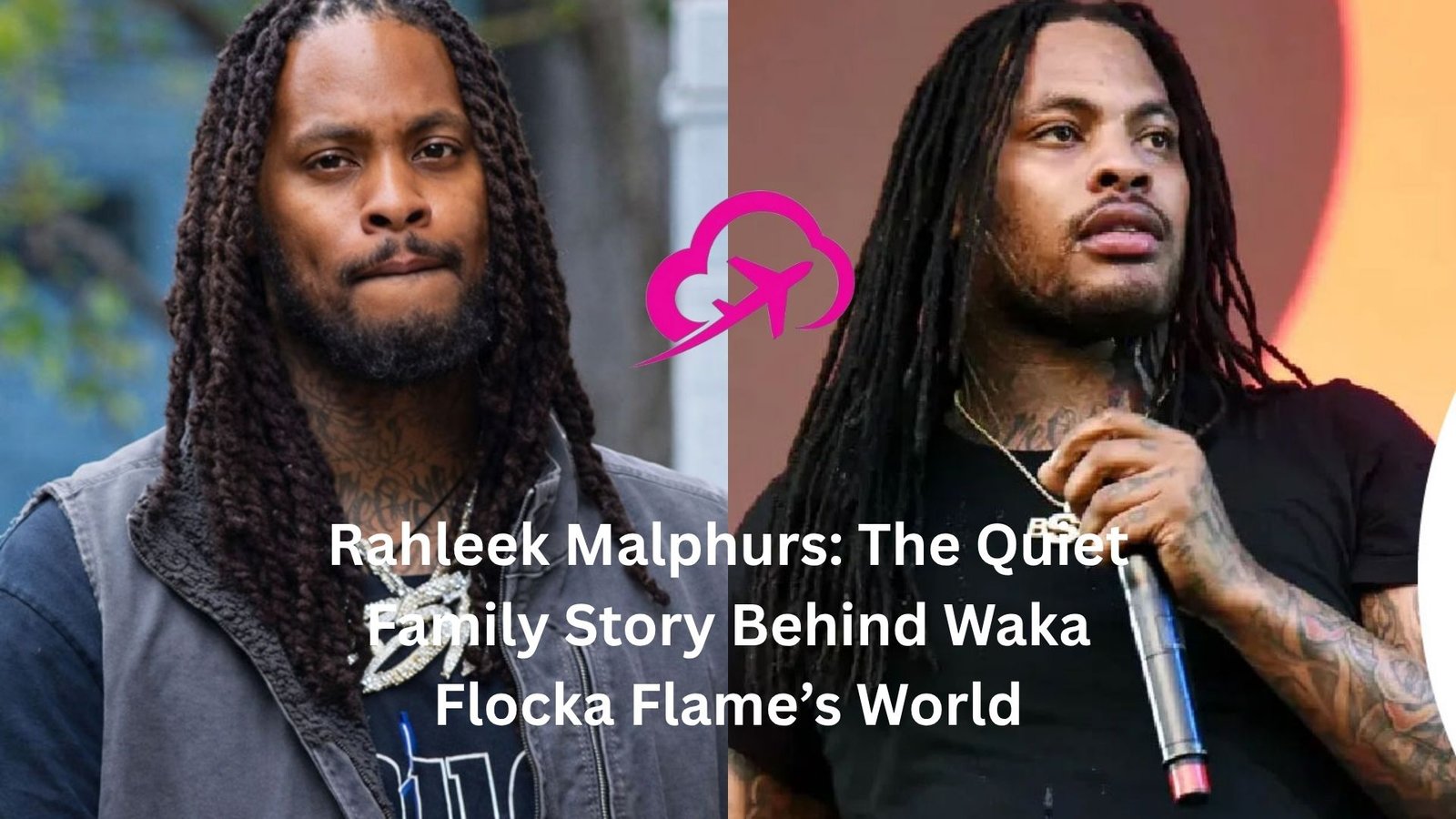
Most people who search for Rahleek Malphurs are really trying to piece together a story that sits quietly in the background of hip-hop history.
Not the loud part. Not the concerts, chains, interviews, or reality TV moments.
The human part.
Rahleek Malphurs was the younger brother of rapper Waka Flocka Flame, born Juaquin Malphurs. Unlike his famous brother, Rahleek never lived in the spotlight. There are no viral clips of him, no albums, no public career to track. What remains are fragments. Family memories. Mentions in interviews. Stories repeated by people trying to understand how one childhood tragedy can shape an entire family.
And honestly, that’s what makes his story stick.
A lot of celebrity relatives get reduced to quick search-engine trivia. But Rahleek’s name keeps resurfacing because his loss clearly changed the emotional direction of the Malphurs family, especially Waka Flocka Flame.
That’s the part many readers connect with immediately. Fame doesn’t erase grief. If anything, it often freezes it in public view.
A Childhood Cut Short
Rahleek Hakeem Malphurs was reportedly born in 1989 and grew up in a large, energetic family connected to Atlanta’s hip-hop culture. His mother, Debra Antney, later became one of the most recognized managers in rap circles. She helped guide artists like Gucci Mane and played a major role in building careers behind the scenes.
But before all the industry attention, they were simply a family trying to survive and move forward.
By most accounts, Rahleek was a smart kid. One report described him as academically gifted and already attending junior high school at a very young age. Another remembered him as thoughtful and helpful, the kind of child teachers naturally notice because he actually paid attention in class.
That detail matters more than people think.
When someone dies young, especially a child, the public often flattens them into a symbol. You hear phrases like “gone too soon” and “bright future,” but you rarely get anything real enough to imagine.
A gifted kid helping classmates with schoolwork? That feels real.
One of the most repeated stories says Rahleek was riding his bike to visit or help a friend when he was hit by a car around the year 2000. He was only ten years old.
Just like that, everything changed.
If you’ve ever watched a family lose a child, you already know the strange thing about grief. The world keeps moving. Bills still show up. People still go to work. Traffic still exists. But inside the family, time splits into two parts: before and after.
The Malphurs family seems to carry that exact kind of fracture.
The Bond Between Rahleek and Waka Flocka Flame
Waka Flocka Flame built a reputation on intensity.
His music exploded with energy during the early 2010s. Tracks like “Hard in da Paint” sounded aggressive, chaotic, almost reckless in the best possible way for that era of trap music. Crowds loved it because it felt raw and unfiltered.
But here’s the thing.
When artists carry that much intensity, there’s usually something underneath it.
Waka has spoken over the years about family pain, loss, and responsibility. While he doesn’t constantly give detailed interviews about Rahleek, it’s obvious the loss stayed with him. Multiple reports and interviews describe the emotional effect Rahleek’s death had on the family and on Waka personally.
Think about the timing for a second.
Waka was still incredibly young himself when his brother died. That’s an age where most kids are worried about school, sports, or getting into harmless trouble with friends. Instead, he was processing a tragedy that many adults never fully recover from.
People sometimes underestimate how much childhood loss shapes personality.
You see it later in subtle ways. Some people become overly protective of family. Others bury themselves in work. Some become louder because silence feels unbearable.
Waka’s career often felt fueled by emotion more than polish. That may be part of why fans connected to him so strongly in the first place.
He never came across as carefully manufactured.
Why People Still Search for Rahleek Malphurs
It’s interesting how certain names continue circulating online years later.
Rahleek Malphurs isn’t famous in the traditional sense. Yet thousands of people continue searching for information about him.
Part of that comes from curiosity around Waka Flocka Flame’s personal life, of course. Celebrity families always attract attention.
But another reason feels more emotional than people admit.
Stories about siblings hit differently.
Almost everyone understands that relationship in some form. Maybe you grew up fighting with your brother over the TV remote. Maybe your sister was the only person who defended you during hard years. Maybe there’s someone in your family whose absence still changes the mood in the room decades later.
Those experiences make stories like Rahleek’s feel personal, even to strangers.
And unlike heavily managed celebrity narratives, this one still feels unfinished and human.
There’s no polished redemption arc.
No movie-style ending.
Just a family carrying grief while navigating fame, business, pressure, and public attention.
That honesty gives the story weight.
Debra Antney and the Weight of Family Loss
It’s impossible to talk about Rahleek Malphurs without mentioning Debra Antney.
In hip-hop, she’s known as a tough, influential manager who helped shape careers behind the scenes. She built relationships, managed artists, and became a respected force in the music business.
But public success and private pain can exist at the same time.
Parents who lose children often describe the experience as unnatural. There’s a sense that the order of life has been broken.
And when families are already dealing with financial stress, career pressure, or unstable environments, grief tends to spread outward into everything else.
People online sometimes treat music industry families like fictional characters. They forget these are households dealing with the same emotional chaos everyone else faces.
One minute you’re discussing contracts and studio sessions.
The next minute you’re planning a funeral.
That contrast is brutal.
You can actually see traces of that emotional survival instinct in the way many hip-hop families operate. Loyalty becomes everything. Protection becomes everything. Public toughness becomes a shield.
Viewed through that lens, the Malphurs family story makes a lot more sense.
The Strange Reality of Internet Biography Culture
Now let’s be honest for a second.
A lot of online articles about Rahleek Malphurs are messy.
Some confuse him with Waka Flocka Flame himself. Others repeat incorrect timelines or conflicting details. One site claims he died as a child. Another says he died in adulthood. Some articles clearly recycle information from each other without checking facts carefully.
That happens constantly with internet biography content.
Once one incorrect detail spreads, dozens of low-quality sites copy it until readers stop knowing what’s true.
The more reliable pieces seem to agree on a few core points:
Rahleek was Waka Flocka Flame’s younger brother.
He died very young after being hit by a vehicle.
The loss deeply affected the family.
Beyond that, details vary.
And honestly, maybe that uncertainty says something important about modern internet culture.
Not every life leaves behind a perfectly documented archive.
Some people exist mostly through memory.
That doesn’t make them less meaningful.
Grief Inside Hip-Hop Families
Hip-hop has always carried stories of loss.
Not just in lyrics, but inside families.
Brothers dying young. Parents struggling financially. Friends disappearing before success arrives. Entire neighborhoods shaped by violence, instability, and survival.
What makes Rahleek Malphurs’ story different is its quietness.
There’s no dramatic headline attached to it now. No ongoing controversy. No spectacle.
Just absence.
And absence can shape people as strongly as presence.
If you listen carefully to artists who experienced childhood trauma or family loss, you often hear the same themes repeating in different forms: anger, loyalty, emotional distance, hyper-confidence, protectiveness.
Those aren’t random personality traits.
They’re coping mechanisms.
Waka Flocka Flame eventually became known not just for music, but also for conversations around mental health, personal growth, and emotional honesty. Fans who only knew the wild club records from 2010 sometimes seemed surprised by that evolution.
But maybe it wasn’t surprising at all.
Pain changes people over time.
Especially unresolved pain.
Why Stories Like This Matter
Some readers might wonder why people should care about someone who wasn’t publicly famous.
Fair question.
But stories like Rahleek Malphurs’ matter because they reveal the hidden emotional layers behind public figures.
Celebrity culture often turns people into simplified versions of themselves. The loud rapper. The strict manager. The reality TV personality.
Real life is never that clean.
Behind every public career, there’s usually a private story nobody fully sees.
Sometimes it’s loss.
Sometimes addiction.
Sometimes family sacrifice.
Sometimes all three.
Understanding those layers doesn’t excuse bad behavior or glorify suffering. It simply makes people feel human again.
And readers respond to that.
You can see it anytime an artist opens up honestly about grief. Fans suddenly stop talking about chart numbers and start talking like normal people.
“I went through something similar.”
“My brother died too.”
“That changed my family forever.”
That connection matters more than most internet trends.
The Lasting Memory of Rahleek Malphurs
There’s something quietly powerful about being remembered through love rather than fame.
Rahleek Malphurs never became a celebrity. He never built a public identity separate from his family story. Yet his name still survives because the people around him carried his memory forward.
That says a lot.
In many ways, his story reflects something universal.
Families aren’t shaped only by the people who stay. They’re also shaped by the people they lose.
You see it during holidays when someone’s chair stays mentally occupied even after years have passed. You hear it when siblings tell the same old stories repeatedly because repeating them keeps someone alive a little longer.
The Malphurs family seems to carry that kind of memory.
And maybe that’s the real reason people continue searching for Rahleek Malphurs.
Not because he was famous.
Because he mattered to the people who were.
That’s a very different kind of legacy.
